
Beyond Fueling: Another Overlooked Way to Reduce Cavity Risk
Beyond choosing the right fueling mixtures and adjusting fueling habits, there are additional tools that can meaningfully reduce cavity risk—especially for endurance athletes. One commonly overlooked but highly effective option is dental sealants.
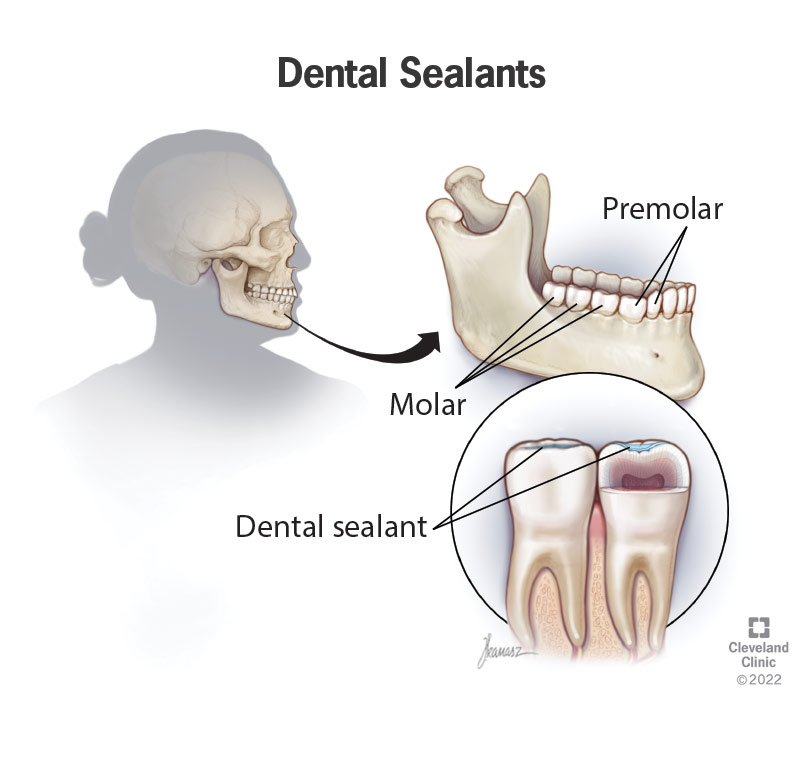


What Are Sealants?
Sealants are small, protective restorations placed on the chewing surfaces of back teeth. Importantly, no tooth structure is removed, making them highly conservative and reversible. A flowable material is applied into the pits and fissures of the tooth, then cured with a UV light. Once hardened, the material forms a physical barrier that “seals” off the most cavity-prone areas of the tooth.
These pits and fissures are particularly vulnerable because they trap carbohydrates, acids, and bacteria—exactly the environment endurance athletes repeatedly expose their teeth to during training and racing.
Clinical studies have shown that occlusal sealants can reduce cavity risk by up to 51% at 24 months, with protective effects lasting up to seven years. That’s a relatively small investment for long-term protection.
Aren’t Sealants Just for Kids?
This is a common misconception. Sealants are traditionally placed on children’s molars shortly after eruption, which is why many adults have never been offered them. However, being an adult doesn’t eliminate cavity risk—and endurance athletes, in particular, represent a high-caries-risk population due to frequent carbohydrate exposure, acidic fueling, and exercise-induced dry mouth.
For athletes with unrestored molars, sealants remain a very reasonable preventive option well into adulthood.
What About Premolars?
Historically, sealants have been placed almost exclusively on molars. However, a strong case can be made for sealing premolars as well. Compared to first permanent molars, sealed premolars show significantly lower caries incidence, making their inclusion both logical and defensible—especially in high-risk individuals.
After all, sealants are more accurately described as “pit and fissure sealants”, and premolars absolutely have pits and fissures worth protecting.
Resin vs. Glass Ionomer Sealants
There are two primary types of sealants:
-
Resin-based sealants
-
Glass ionomer sealants
For most patients—and particularly for athletes—resin-based sealants are preferred. Multiple studies demonstrate that resin sealants have significantly better retention and longevity compared to glass ionomer materials. In practical terms, this means fewer failures and longer-lasting protection.
From the Chair: Key Clinical Takeaways
-
Consider asking about sealants on all molars and premolars if those teeth are unrestored
-
Request resin-based sealants rather than glass ionomer for improved durability
-
Sealants are a proven, conservative, and effective way to reduce cavity risk—especially for endurance athletes
-
If you’re already in the chair for a cleaning, it’s an ideal time to discuss whether sealants make sense for you
For athletes who already optimize training, fueling, and recovery, sealants are simply another smart, evidence-based way to protect long-term performance—this time, for your teeth.